on the impermanence of misery
Introduction
It felt like a punch to the gut when Block cleaved over 40% of the company’s manpower last month. I cried while saying goodbye to my manager, who has helped me more than anyone else to navigate the impact that AI is having on our industry in rapidly accelerating ways. On X, jack posted the full email he sent to us announcing the cuts, indicating that we are focusing on using intelligence to multiply the impact that we each get to have while empowering people to transact through products like Square, Cash App, and TIDAL. The severance package looks good! I’m still not completely certain whether I prefer the stability of a job or the opportunity to go pursue something new with a check for 20 weeks of pay. I am grateful for each and every one of the former builders that I got to work with at Block, and I am excited to see what they do next.
While the layoffs felt swift and sudden, I have felt a lot of anxiety about the way my job has changed since Opus 4.5 was released on November 24, 2025. This particular model release felt like yet another watershed moment in the progress of AI development tools seeing my agents now able to research, plan, and implement complex software projects with nearly zero issues, every time. Suddenly programming, a skill that I’ve been working to mindfully develop over the past decade and a half, feels like a waste of time when I can have Amp implement ideas faster than I can conceive of them. In some ways, I feel like my ambition and drive has been unblocked: I pushed over 3 times the amount of code changes in 2025 than I did in 2024, and my contributions in 2026 are on pace to 6x the impact I had in 2025. In other ways, I feel deeply sad that the craft of code is dead, but it would be foolish to go back to the way things once were.
During this tumultuous watershed moment, I happened to finally be taking time to read Why Buddhism Is True with my book group. The book has been sitting on my shelf for a couple of years since a friend recommended it to me. I am not certain what prompted me to finally pick it up, but I am thankful that I did. Inside, Robert Wright explores a strictly secular perspective on Buddhist teachings that deeply resonates with me; as soon as I finished the book the first time, I started again from the beginning to capture the nuances that I wanted to absorb. In particular, Wright explores the Buddha’s discourses on the illusion of the self, emptiness, and mindfulness in a manner that is grounded in practical science rather than dogmatic religious belief. Wright recalls attending a vipassana meditation course at the Insight Meditation Society center in Massachusetts, where he had his own first-hand experience putting Buddha’s teachings to work. I was ecstatic to discuss the book with my group, and I knew right away how powerful it would be to experience the objectivity that Wright experienced with extended meditation.
jack is also a vocal supporter of vipassana meditation, having gone to his first course at Dhamma Siri near Dallas in 2017. jack describes vipassana as different from conventional notions of meditation, which are seen as calming, relaxing, and a detox of all of the noise of the world. Instead, vipassana is extremely painful and demanding physical and mental work. During a 10-day silent course, there are no devices, reading, writing, physical exercise, music, intoxicants, meat, talking, or even eye contact with others. The daily timetable is designed for continuous practice: from the wake-up bell at 4am until bedtime at 9pm, attendees are given the ideal environment for deeply penetrating the complexes of the mind. By staying highly aware of unconscious reactions to pain and pleasure, attendees attempt to reprogram their minds to remain equanimous and eliminate the root causes of suffering as identified by the Buddha: craving, suffering, and ignorance. I remember reading about jack’s experience (and the public blowback he received) and being intrigued, but it took me nearly a decade to be ready to experience it for myself.
Exactly one month after the release of Opus 4.5, I met Aman. Like me, Aman is a software engineer that has been experiencing the rapid transformation of our craft into an automated task that computers complete in a fraction of the time. However, Aman was different from others that I meet: he was glowing with a joy and confidence that I felt like I needed to learn more about. I discovered that he had just returned from a difficult 10-day vipassana meditation course at Dhamma Sukha, nearly equidistant from Austin, Houston, and San Antonio in the middle of Texas farmlands. I was eager to learn more about Aman’s experience, and within two weeks of our introduction, I had worked out my own schedule to find time for my own 10-day course at Dhamma Sukha in March. I was excited that I had found a way to fit the new experience into my busy life, but anxious about what the experience would be like in practice.
Two weeks before jack decided to make Block smaller, I got to meet him during a company offsite in San Francisco. I was eager to share with him my plans to finally participate in a vipassana course, and I asked for his tips for successful completion. He told me that most students drop out of the course on days 2 and 6, and that the best thing I could do for myself would be to do no physical exercise and to follow the teacher’s instructions as closely as possible. I asked him how he makes time for such an intense and isolating practice in his role: he told me that it pays back dividends with every moment expanding in increased awareness. When the layoffs hit two weeks later, I was thankful that I had already planned the time off so that I could step away while the company stabilized. However, nothing could have prepared me for how difficult it was to be alone in my head for 10 days.
The course
When the first day of the course arrived, I had done everything I could possibly do to set up redundancy at work, find care for my kids, and plan my life for months following the retreat; I wanted to be as present as I possibly could be to avoid worrying about life outside of the meditation center. Arriving on the first day, I was shocked to see how nice the accommodations were! For a completely free, donation-based and volunteer-supported organization, I was ecstatic to have my own private room, bathroom, and A/C, along with all of the props necessary to make my meditation as comfortable as it could be for the 10-day course. At 5pm on the day I arrived, I turned in my phone, keys, and watch with the management for safe keeping during the course. I felt ready to drop in and isolate, but I still didn’t really know what I was preparing to encounter. The 12 other men I took the course with each introduced themselves during the first dinner we had together, and then we all went to the meditation hall together to embark on our vow of silence.
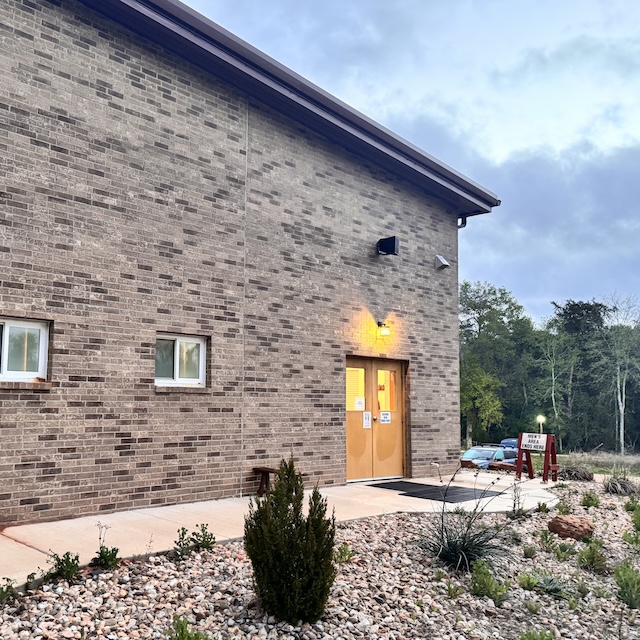
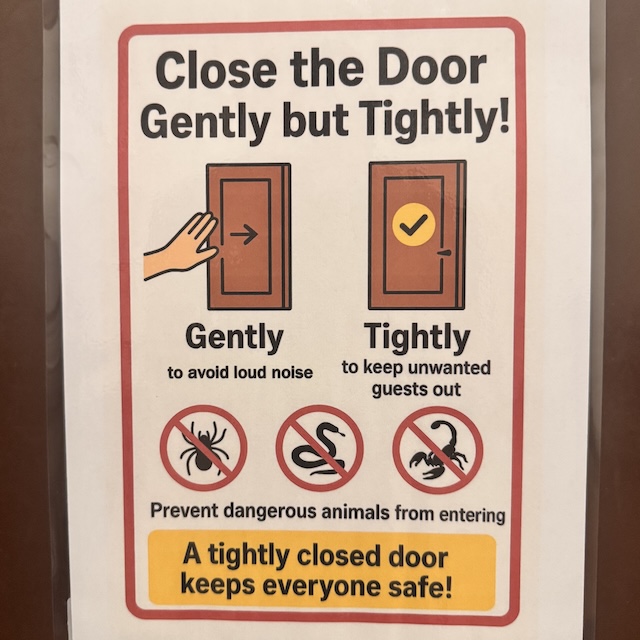
The course I took at Dhamma Sukha follows a series of English lectures and guided meditations recorded by S. N. Goenka in the early 90s. In each discourse, which we watched together each night beginning from Day 0 until Day 10, Goenka describes the strictly practical, non-sectarian nature of vipassana meditation. A practice preached by Gotama the Buddha, but lost in traditional Buddhist religion, vipassana practitioners seek to purify the mind through intense introspection and observation of the sensations on the body. Vipassana meditation is practiced by people of all faiths, languages, and creeds, and intends to pave a path towards liberation of suffering through the direct observation and dissolution of sensations by observing the impermanent nature of everything that we encounter. According to the Buddha’s teachings, humans are born into misery and can only free themselves from this misery by accepting the existence of misery and the changing nature of all of mind and matter.
Beginning on Day 1, I was instructed to practice anapana meditation, a form of meditation that focuses strictly on observing natural breath. I quickly discovered how difficult it would be to sit on the floor for 10 hours of meditation each day, even with all of the pillows, back rests, and stools they had to offer. In a private interview with the assistant teacher (AT), I asked if he had any tips for making it through the 1 hour group sittings without adjusting my posture — he told me not to worry, and to move as much as I needed to during my meditation. Still, I was uncomfortable, I learned things about my body that I’ve never known, like that if I cross my right leg under my left leg, my right knee starts hurting after 30 minutes, but if I put the right leg over the left, I can make it 50 minutes without pain. It was difficult to focus only on my breath without counting, visualizing, or concentrating on anything else, but I did my best to follow the instructions, which are designed to help sharpen the mind’s focus on sensations in a particular region of the body.
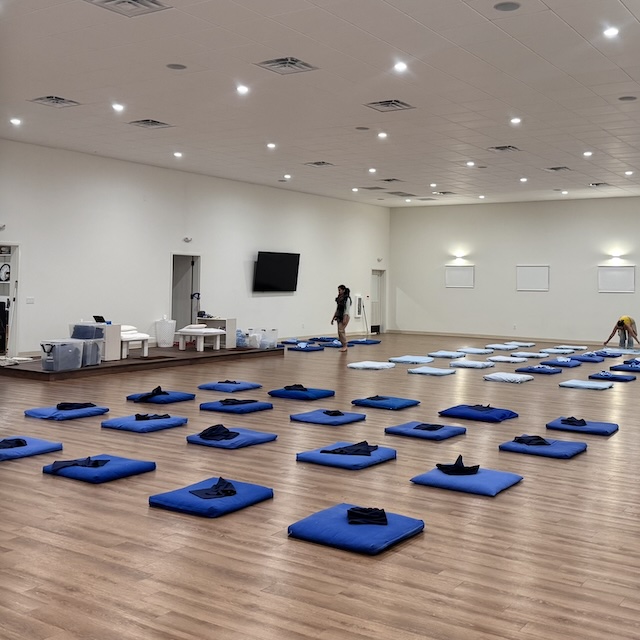

I anxiously anticipated Day 2, because of what jack and others had told me. I later heard of one woman that left that day, abandoning her husband who only learned of her departure a day later. I woke at 4:00am, showered and entered the meditation hall promptly at 4:30am. I meditated diligently until 6:30am, when I took the short walk along the trail to the dining hall in the dark. I drank tea, ate my oatmeal and bananas and then rested until 8:00am, when I joined the group meditation in the hall. We listened to Goenka’s voice guide us through the anapana practice and I adjusted my posture no less than 10 times in the 60 minute meditation. Afterwards, we took a short bathroom break and returned at 9:10am for instructions on what to practice next. At 11:00am, I walked again to the dining hall for lunch and enjoyed a vegetarian meal in silence while I observed the body language and habits of each of the other men navigating the difficult day. At 12:00pm, we took a break and some of the men met with the AT to ask questions in private about their practice. At 1:00pm, we began again on our own until meeting for a second group meditation at 2:30pm, which was again guided by Goenka’s voice. From 3:40pm to 5:00pm we again practiced on our own until tea time. During vipassana courses, there are no dinners, and only first-time students are allowed to eat fruit during the 5:00pm tea time. Following tea, we all met again in the meditation hall at 6:00pm for another group meditation, which was followed by the dhamma lecture at 7:00pm. At 8:15pm, we embarked on our final group meditation to close the day, followed by the 9:00pm bedtime.
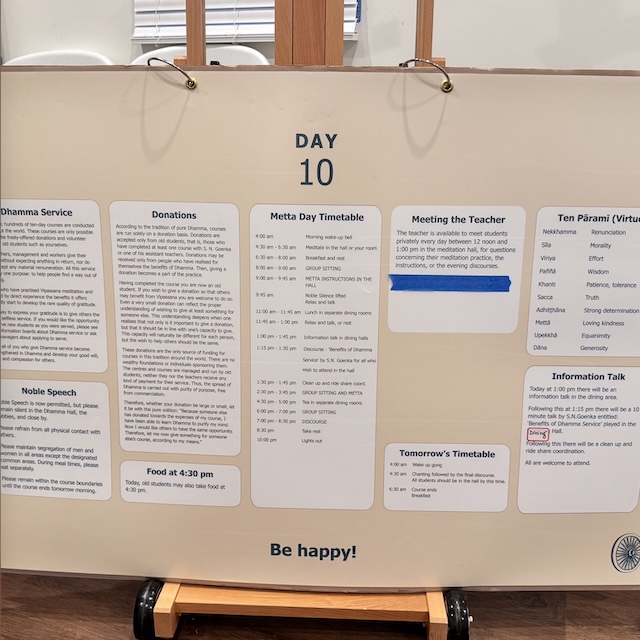
This was the schedule in which we practiced every day, and I grew to quite like it. Goenka instructed us to resist the urge to overeat, and instead consume about 75% of the food that we would normally intake during the daily lunches. While this was difficult at first, I grew to understand more and more how much less energy I was consuming and how much a half full stomach allowed me to focus on getting deeper in my practice. Day 2 came and went without an issue, but day 3 was where I started struggling as I felt the monotony and isolation of the schedule setting in. I felt like I was going crazy, having endless thoughts that I could do nothing with — no writing, phone usage, or ability to communicate externally. Still, I remembered Aman’s joy and felt confident that it would be a worthwhile experience if I could endure.
Day 4 arrived with a triumphant entrance: it was finally Vipassana Day. I recall feeling chills as I stood outside of the meditation hall at 4:25am and watched one of the old students exit the dorm wearing all white — the day had finally arrived. Our morning schedule remained unchanged, but we were directed to join together for an extended session in the afternoon from 2-4pm to finally learn the practice of vipassana meditation. I felt it getting easier and easier to drop into meditation after three full days practicing anapana, and I was eager for a break in the monotony on the afternoon of the fourth day. I ate lunch and rested before joining in the meditation hall with the rest of the group for our lesson together. I felt a surprising familiarity upon learning that the style of vipassana meditation is very similar to body scanning, which I have encountered many times elsewhere, but I had never experienced it in such an environment conducive for feeling the body in the way that I did that day.
In the final instructions given on Vipassana Day, we were directed to begin practicing Adhiṭṭhāna during group meditations; it was no longer acceptable to change postures, and we were instructed to feel the painful sensations that arose and concentrate on them instead of reacting to them. I think that this is the true power of vipassana mediation, since it is retraining our unconscious mind to be mindfully aware of the sensations that we feel and avoid feeling aversion or craving towards them, instead observing them with equanimity. Because of this, days 5 and 6 became much more engaging — I was learning even more about my body and the “blind spots” where my brain had become unable to feel and observe. Over time, I felt able to feel more and more parts of my body as I moved my concentration between each part. I observed when I felt happy, and when I felt sad. I observed when I felt hungry, and when I felt full. I observed when my back hurt, and when I felt comfortable. I observed when my buttocks went numb, and I didn’t react to any of it. I stayed present and equanimous. I was finally practicing vipassana.
Something changed on day 7, and I’m still not sure what. Maybe it was another wave of feeling like I had gotten past the anticipated exit of day 6, or maybe it was just that I deeply missed my kids. This was the longest time that I had ever gone without speaking to them, and I made the mistake of not bringing any physical pictures of them with me to the course. I couldn’t stop thinking of them when I tried to meditate, and it became much harder to focus on the sensations in my body. This continued into day 8, and I began counting down the sittings I had remaining until I would be able to leave and reunite with them. I struggled a lot with this, as we were being encouraged to practice non-attachment and equanimity, I was just ready to be done. I knew something would be changing on day 10, but I didn’t know what yet, so I stayed disciplined and stuck with the practice heading into the final day.
In the discourse on day 9, we were told that we’d be learning the practice of metta meditation on the morning of day 10, followed by a break in our vow of silence so that we could relax with our fellow students. I was elated — I am familiar with the practice of metta, and have taught my kids the practice as well. I was so excited to be able to end the week with such a meaningful, loving practice. On day 10, we had an extended group meditation at 8:00am while Goenka guided us through learning how to take the awareness, equanimity, and compassion that we had been building up for 9 days and to extend that to all beings everywhere. I wept. It was such a beautiful way to end such a hard week. I was so excited to get to talk to my fellow students and commiserate on the difficult experience that we had each gone through in isolation.
Conclusion
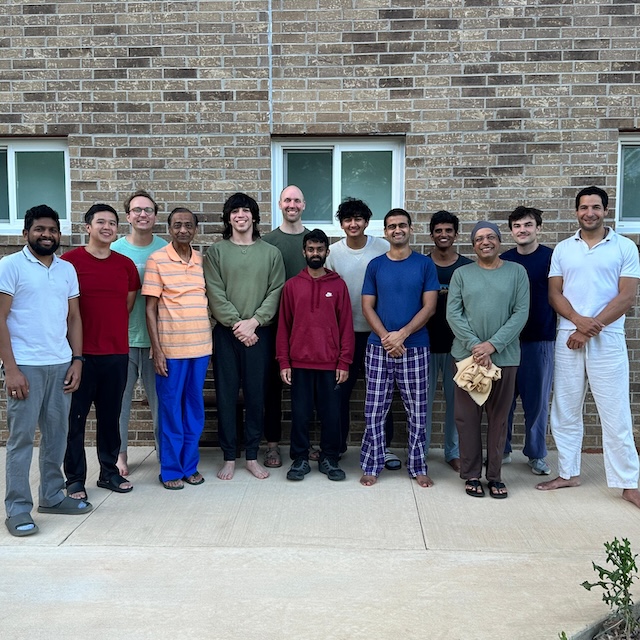
I cannot wait to attend my next 10-day silent vipassana meditation course. While difficult, it was so, so incredibly rewarding. I feel so much joy, gratitude, awareness, and equanimity that I am excited to share with my children and the people around me. There is nothing like getting the opportunity to renounce all of my possessions and comfort in life to live like a buddhist monk for 10 days. I don’t think I would’ve gotten the same reward from a shorter course, and I encourage anyone reading this to find an opportunity to experience the practice for yourself. It’s such a powerful thing to grasp the impermanence of life, pain, joy, and everything in the world. It’s so meaningful to be able to let go of misery and enjoy peace and happiness now in this life. There is nothing in this practice asking for your conversion or a change in belief — it is strictly practical and full of meaningful lessons about how to liberate ourselves from the misery that we are each born into.
May all beings be happy.
May all beings be peaceful.
May all beings live with ease.
May all beings be liberated.